
Last updated November 25, 2026
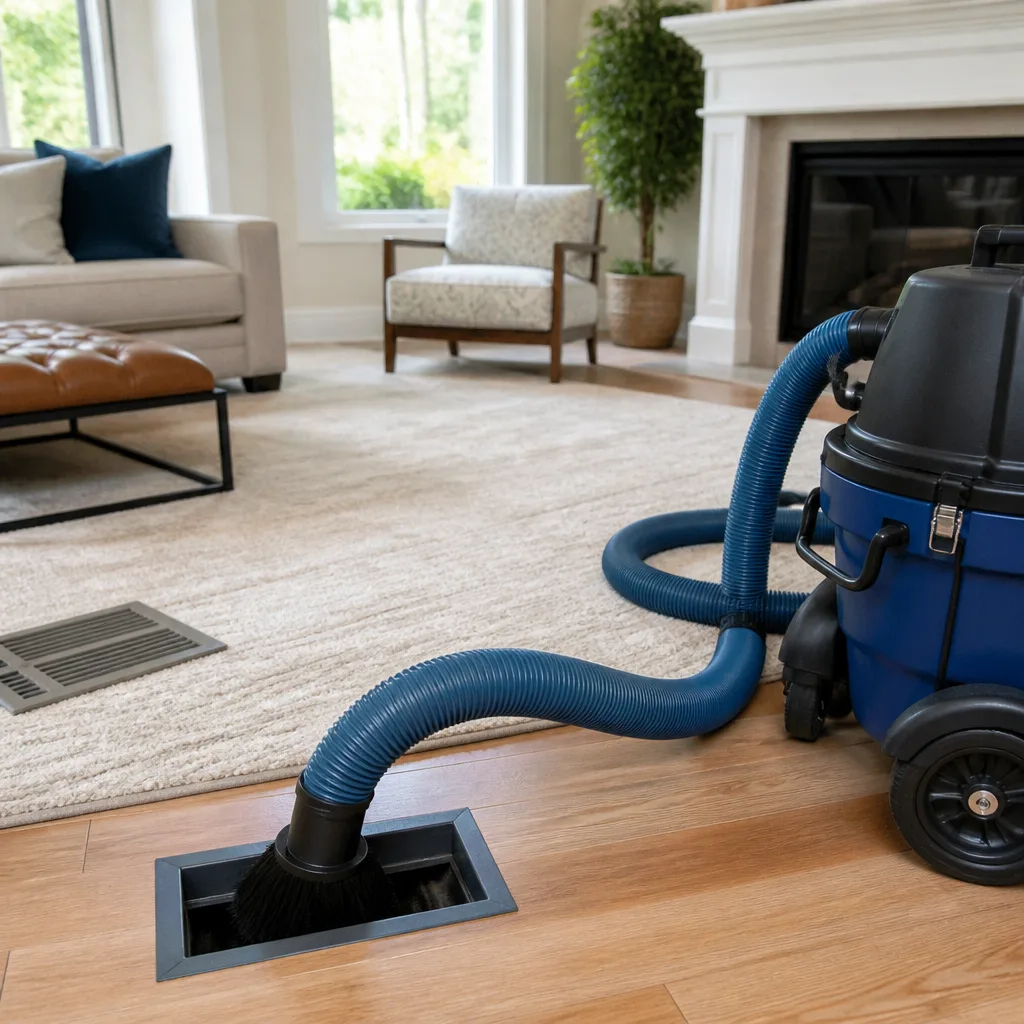 Whole-home duct cleaning
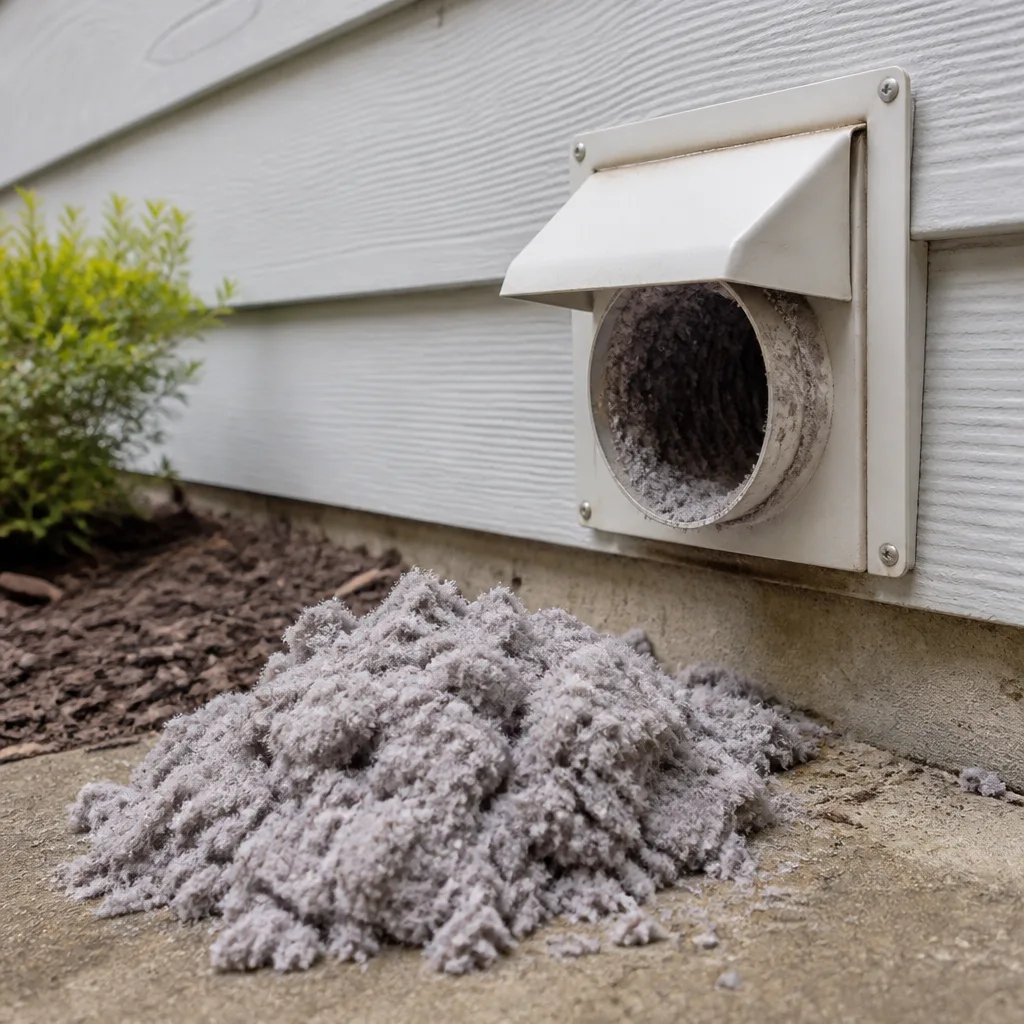 Dryer vent cleaning
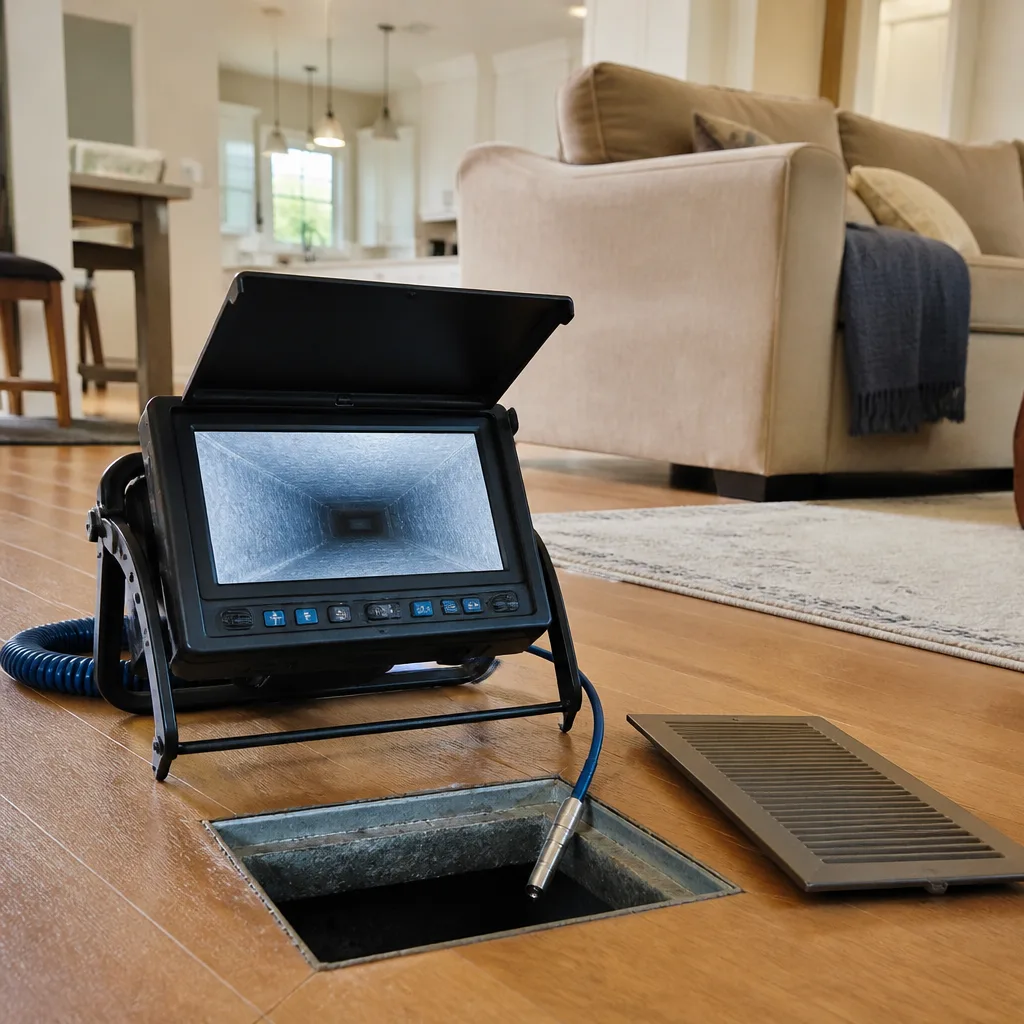 Camera inspection
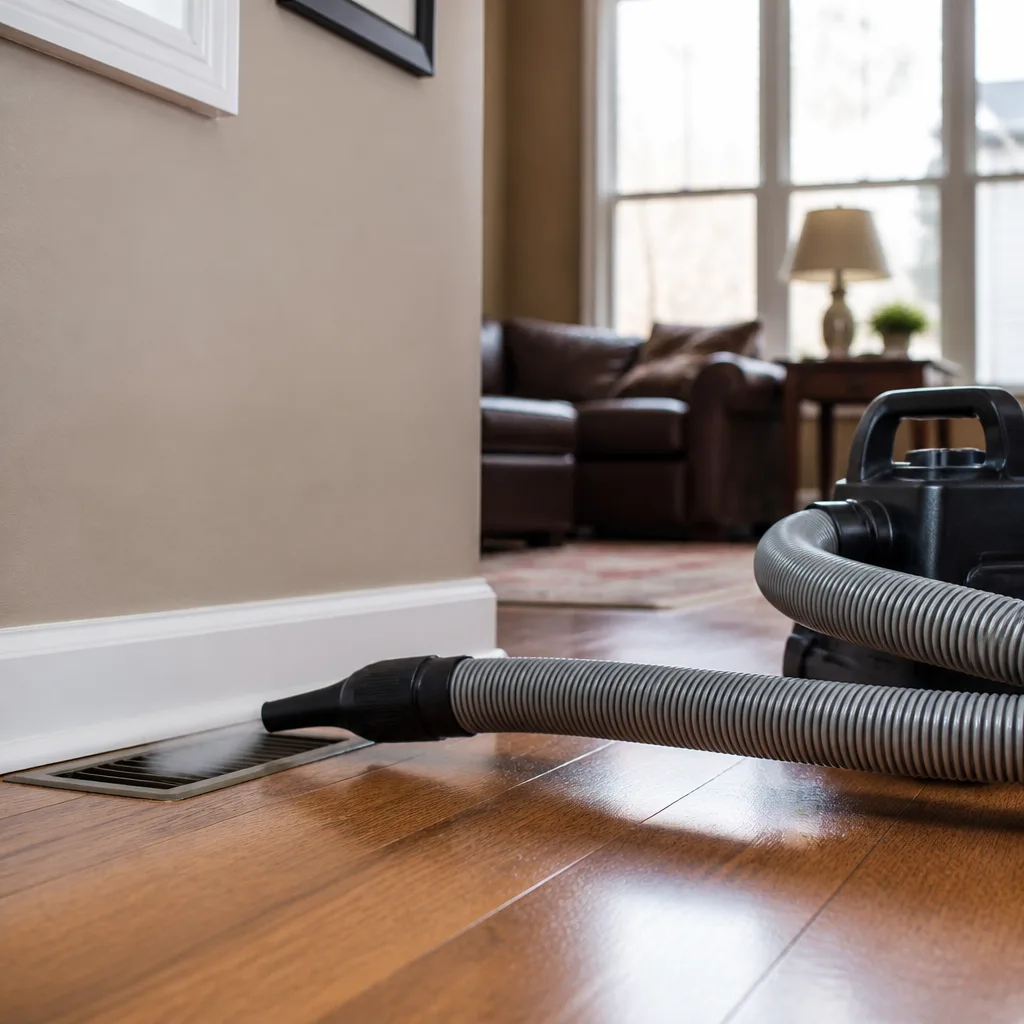 Sanitizing & deodorizing
Whole-system duct and dryer vent check with before-and-after photos - you see exactly what came out of your vents
That "$99 whole-house special" is a bait ad - the real number appears once they are in your hallway, or the "clean" is a shop-vac at the register. We photograph the inside of your ducts before and after instead.
Air Duct Cleaning Permits, Codes & Inspections in Costa Mesa, CA: What You Need to Know
Here’s the part that surprises people: the cleaning itself is not the regulated part. Opening your air handler, cutting out a run of flex duct, or spraying an antimicrobial coating through a supply trunk is where the rules change, and the paperwork follows the technician, not the mop. Homeowners in Costa Mesa get into trouble not because they hired someone dishonest, but because nobody ever drew the line for them between “cleaning” and “mechanical work.” This guide draws that line. You’ll learn where California licensing rules apply, when the City’s Building Division actually gets involved, what EPA Section 608 covers, how to check a contractor’s C-20 license, and which documents to keep after the work is done.
Quick Answer
Routine air duct cleaning in Costa Mesa does not require a building permit, and no city inspection is triggered by cleaning alone. The moment a technician modifies the duct system, replaces duct sections, seals leaks with mastic or aerosol systems, swaps registers or grilles, or opens refrigerant components in the air handler, the work falls under California contractor licensing rules and typically requires a C-20 Warm-Air Heating, Ventilating and Air-Conditioning contractor. Always verify that license with the Contracting State License Board before work starts.
Styles & brands we work with
- Whole-home duct cleaning
- Dryer vent cleaning
- Camera inspection
- Sanitizing & deodorizing
Table of Contents
- Where the Line Sits: Cleaning vs. Mechanical Work in California
- How Costa Mesa and Orange County Enforce HVAC Work
- EPA Section 608 and the Refrigerant Question
- How to Verify a C-20 License and What the Handyman Exemption Really Means
- Duct Sealing, Register Replacement, and Coil Cleaning: Which Require What
- What an Inspection Actually Looks Like (and Who Requests One)
- Documents to Keep After Duct Work: Escrow and Insurance
Where the Line Sits: Cleaning vs. Mechanical Work in California
California Business and Professions Code treats warm-air heating and air conditioning as a licensed trade. Cleaning a duct system, in the ordinary sense of agitating and extracting accumulated dust, does not alter the mechanical system, so it sits outside the licensing requirement for construction work. But the code does not define “cleaning” as a protected activity with specific wording. What it protects is the installation, alteration, and repair of the mechanical system. That distinction is where almost all confusion comes from.
Think of it this way. Vacuuming the inside of a rigid duct trunk is maintenance. Cutting a new branch into that trunk, replacing a crushed section of flex run, or sealing joints with mastic is alteration or repair. The first does not require a C-20 contractor. The second does.
- Cleaning (no C-20 required): source removal of dust and debris from ducts, plenums, registers, and air handler cabinet surfaces. Includes brush agitation, negative-air capture, and sanitizing sprays applied to interior duct surfaces without modifying the duct.
- Maintenance (no C-20 required but should be documented): filter changes, register and grille removal for access, temporary re-sealing with tape or mastic at the point of access.
- Mechanical work (C-20 required): replacing a section of duct, installing new duct runs, sealing leaks permanently with mastic or aerosol sealant systems, replacing registers or boots, coil cleaning that requires opening the refrigerant circuit, and any work involving electrical connections to the air handler.
- Permit-required work (C-20 required plus city permit in most cases): new duct installations, major reconfigurations of the distribution system, and any work that changes the mechanical system’s layout or capacity, including in larger renovation projects.
What this means for you: if a technician is going to cut, replace, or permanently seal duct components, ask for the C-20 license first. If they are going to clean, agitate, and extract, no license is required by the state, but credentials and equipment still matter for the quality of the job. Our own air duct cleaning work is source-removal cleaning with professional-grade Rotobrush contact-vacuum equipment, and if we find a crushed or disconnected run during the job, we tell you the repair falls on the mechanical side of the line so you know what you are approving.
How Costa Mesa and Orange County Enforce HVAC Work
Costa Mesa administers its own building permits through the City’s Building Division, and the review of mechanical permits is governed by the California Building Code and California Mechanical Code as adopted locally, along with Orange County’s broader code context. In practice, the Building Division is only pulled into an HVAC service call in a handful of situations. Routine duct cleaning, filter replacement, sanitizing, and coil cleaning where the refrigerant circuit stays closed never reach the permit desk.
The situations that do trigger a permit in Costa Mesa:
- New ductwork or a system reconfiguration that changes the layout of supply or return runs.
- Installation of a new air handler, furnace, or condenser as part of a remodel or replacement. This is a mechanical permit, and in most cases an electrical permit alongside it.
- Duct sealing as part of a larger energy or renovation project where the scope of work is reviewed against Title 24 requirements.
- Any work that touches the structural framing to route new duct runs, which can bring the building permit into the conversation.
- Work on a multi-unit property where the property manager is coordinating permits for a larger scope.
For a stand-alone cleaning visit, none of those apply. You will not receive a permit, you will not receive a city inspection, and the City will not be involved. If a contractor tells you that duct cleaning in Costa Mesa requires a permit, that is a red flag. It does not. If a contractor tells you that the duct sealing they want to sell you needs no permit and no C-20 license, that is a different red flag, because permanent sealing of duct joints is mechanical work.
Coastal Orange County homes have their own quirks. Older Costa Mesa neighborhoods around the Eastside and the Westside often have duct systems installed decades ago, with flex runs that sag, disconnections at the boot, and insufficient return air. A cleaning visit frequently turns up a disconnected run or a crushed flex duct in the attic. Those are the finds that matter most for your air quality and your energy bill, and they cross into repair territory. Addressing them properly means either the cleaning contractor holds a C-20 license or the repair is handed to a licensed mechanical contractor.
EPA Section 608 and the Refrigerant Question
Section 608 of the Clean Air Act governs refrigerant handling in the United States. Anyone who opens a refrigerant circuit to add, reclaim, or recover refrigerant must hold EPA Section 608 certification. That is a federal rule, separate from California contractor licensing. The two credentials are not the same, and a contractor can hold one without the other.
Where this matters during a duct cleaning call: technicians sometimes open the air handler cabinet to clean the evaporator coil. Simply cleaning the coil surface with the cabinet open and the refrigerant lines intact does not require Section 608 certification. But if the coil needs to be pulled, the line set disconnected, or refrigerant recovered, Section 608 applies. This is a frequent upsell path in the industry, and it’s worth asking about in advance.
- Ask the question up front: “Will you need to open the refrigerant circuit to clean the coil?” If the answer is yes, ask for the technician’s Section 608 certification type.
- Check the contractor’s C-20: any refrigerant work in a residential HVAC system also falls under C-20 scope, so the company performing it should hold both.
- Document what was done: if the system was opened, the contractor should record the refrigerant recovered and recharged. Those records belong in your file for later resale or warranty purposes.
Our HVAC cleaning work stays on the closed-circuit side of the line whenever possible. We use Nikro equipment for the air handler cabinet and coil surface cleaning, and if the coil needs to be pulled we tell you that the line set disconnect is a job for a Section 608 certified technician. Nothing gets opened without your written approval. Full-scope HVAC cleaning as part of a system refresh is one of the ways we keep the cleaning side separate from mechanical work, and it’s the honest way to handle the coil question.
How to Verify a C-20 License and What the Handyman Exemption Really Means
The Contracting State License Board (CSLB) maintains a free public lookup at cslb.ca.gov. Enter the license number or the contractor’s business name and you’ll see the license classification, the expiration date, the workers’ compensation status, any bonds on file, and any disciplinary history. This takes two minutes and prevents the majority of bad outcomes. We recommend doing it before every HVAC-adjacent service, not just large installations.
A C-20 license specifically covers Warm-Air Heating, Ventilating and Air-Conditioning work. If a company presents a general B license for duct repair or a full HVAC installation, the classification question is worth raising, because the CSLB requires the classification to match the work being performed.
The handyman exemption is probably the most misunderstood piece of California contractor law. Under B&P Code §7048, an unlicensed person may perform work on a single-family residence if the work is under a stated dollar threshold and the owner acknowledges the exemption in writing. But the exemption does not cover work that requires a licensed trade. HVAC work falls in that licensed-trade category, which means a handyman cannot legally perform duct modifications, coil replacement, or refrigerant work simply by staying under the dollar cap. The exemption is a convenience for small repairs, not a loophole for mechanical work.
Numbered steps for verifying a contractor before they touch your system:
- Ask for the license number in writing, ideally on the written estimate.
- Search the CSLB database by license number. Confirm the classification (C-20 is what you want for mechanical work) and confirm the status is “Active.”
- Check the “workers’ compensation” field. If it says “exempt,” that means the contractor has no employees. If it shows a carrier, note the carrier name for your records.
- Check for any disciplinary actions or citations. These are visible on the public record.
- If the technician performing refrigerant work will be different from the license holder, ask for Section 608 certification documentation separately.
- Keep the printout of the CSLB page with your file. It’s a one-page document that reinforces your diligence if the work is ever questioned.
For duct sealing and repairs we perform alongside cleaning, the license question is straightforward: we coordinate with licensed C-20 professionals so your documentation trail stays intact. That is how a cleaning, a dryer vent cleaning, and a duct repair can all happen in a single service visit without any one of them exceeding the legal line.
Duct Sealing, Register Replacement, and Coil Cleaning: Which Require What
These three services cause most of the confusion, so it helps to spell out exactly where each one sits. Duct sealing in the ordinary sense of taping or mastic-sealing a joint that was opened for access is maintenance. Aerosol-based duct sealing that injects a sealant mist through the system to find and close leaks is alteration, and it lands squarely in C-20 territory because it changes the airflow characteristics of the mechanical system.
- Register and grille replacement: if the register is unbolted and swapped for a same-size unit at the same location, no permit is required, and technically this is minor maintenance. If the register location changes, or a new boot is installed, it becomes mechanical work. A C-20 contractor should perform it.
- Supply and return boot replacement: mechanical work. C-20 required. In most Costa Mesa cases, no separate building permit for a single boot swap, but the licensed contractor is mandatory.
- Duct section replacement: mechanical work. C-20 required. If two or more duct sections are replaced as part of a larger renovation, a permit may be triggered depending on the scope.
- Coil cleaning with the circuit intact: cleaning. No permit. No C-20 required for the cleaning itself.
- Coil cleaning with the circuit opened: mechanical work. C-20 required plus Section 608 certification for refrigerant handling.
- Antimicrobial or sanitizing treatments applied to duct interiors: this sits in a gray zone. The application to a duct you are already cleaning is not a construction activity per se. But if the treatment is registered with the EPA as a pesticide, the applicator should hold the appropriate applicator certification. Ask for the product label and the applicator’s credential.
We keep this line visible on every job. Cleaning is cleaning, and we do it with professional-grade equipment that agitates and extracts: a Rotobrush system for the supply and return runs, Abatement Technologies negative-air and HEPA filtration to capture what we displace. If the job turns up a disconnected flex run or a disintegrated boot, we write it up as a mechanical repair and either handle it through a C-20 licensed partner or leave it in your hands to schedule separately. Repair what we find, but do it under the right license. That’s the rule.
What an Inspection Actually Looks Like (and Who Requests One)
For a routine air duct cleaning in Costa Mesa, there is no inspection. No city inspector, no building department sign-off, no certificate of occupancy update. The service is a maintenance visit and it leaves no trace in the public record. That is exactly why documentation matters so much, because you are the only person who will have a record of what was done.
Where inspections do come up:
- Building permit inspections. Triggered when a permit was pulled for mechanical work. A city inspector verifies the installation against the approved plans. Not applicable to cleaning.
- Home inspection during resale. A real estate inspector will look at the HVAC system and may flag visible duct issues (disconnections, taped-over seams, crushed flex). They will report these as observations, not code violations, but a buyer’s agent may ask for documentation.
- Insurance inspection. Triggered by claims involving water damage, smoke, or air quality. The insurer may want to confirm the source of contamination and the remediation status.
- Mold remediation clearance. If the ducts were cleaned as part of a mold remediation project, a third-party clearance inspection may be required to confirm the work met a remediation standard. This is a separate protocol, and it usually involves an independent inspector, not the remediation contractor.
- Title 24 compliance verification. Applicable in specific renovation contexts, not in routine cleaning.
Property managers in Costa Mesa tend to be more attentive to this than individual homeowners, because their liability exposure is different. Multi-unit buildings often have a compliance file that should include every HVAC service performed on the property. For those clients, we produce a service summary after each visit that documents the date, the systems cleaned, the equipment used, and any findings that crossed into mechanical territory. That summary is what comes in handy during insurance filings and property transfers.
Documents to Keep After Duct Work: Escrow and Insurance
What goes in your file? At minimum, four items: the written estimate you approved, the invoice showing what was actually done, the contractor’s license and insurance information, and a written service summary describing the scope. If refrigerant was involved, add the recovery and recharge record. If a permit was pulled, add the permit number, the inspection sign-off, and the final record from the building department. These documents come up in three places: home sale disclosure, insurance claims, and future warranty claims.
California’s real estate disclosure requirements mean that any material improvement affecting the property’s systems should be documented for the buyer. An unpermitted mechanical change discovered during escrow is one of the most common reasons sales stall. A licensed contractor’s invoice, with the C-20 number printed on it, is your evidence that the work was done properly, even when no permit was required. If the work is unpermitted and should have been permitted, you are looking at a retroactive permit process, an inspection, and in the worst case a re-done install. The cost of keeping a folder with a few printouts in it is zero. The cost of not having one is not.
For insurance, the four categories most likely to matter are water damage (ductwork saturated during a plumbing leak or AC condensate overflow), smoke damage (fires affecting duct interiors), mold (from chronic moisture in the system), and air quality claims. In every one of those situations the insurer will ask two questions: when was the last service, and who performed it? Having a documented service record from a professional-grade cleaning with Rotobrush and Abatement Technologies equipment is a much stronger answer than a receipt from a bargain cleaning that left no detail.
We hand every client a written summary after the visit. It names the systems cleaned, the equipment used, the products applied (with brand and label information for any Honeywell or Aprilaire products installed), any findings that crossed into mechanical scope, and the license credentials of anyone who performed licensed work. That summary is a property record, not a sales brochure. Here’s what we use and why: the record is the point.
Common Mistakes to Avoid
- Assuming duct cleaning requires a permit. It doesn’t in Costa Mesa. If a contractor tells you the city permits and inspects routine cleaning, that is a signal they are unfamiliar with California code, not a signal that they are thorough.
- Assuming duct repair requires no license. It does. Permanent duct sealing, boot replacement, and any alteration to a flex or rigid run is C-20 mechanical work. A handyman doing it under the exemption is not covered for it.
- Missing the refrigerant question. If the coil needs to be pulled during an air handler cleaning, ask for Section 608 certification before the technician opens the circuit. This is a federal requirement, and it applies whether or not a C-20 license is on file.
- Not verifying the license. Two minutes on the CSLB lookup is worth more than a stack of marketing claims. A contractor without an active C-20 cannot legally perform duct repair, no matter what their estimate says.
- Letting a third party pull a permit without telling you. In Orange County, HVAC permits need to be under the name of the licensed contractor who is performing the work. If a property manager pulls a permit on your behalf, you need that on record with the city.
- Throwing out the service summary. Not every contractor produces one, and the ones that do are worth keeping. Lose it, and you lose the ability to prove the work was done properly if escrow or an insurance adjuster asks.
- Treating “sanitizing” as a regulated service without credentials. If the sanitizer is EPA-registered, ask for the label and the applicator’s certification. Not all sanitizers are the same, and not all applicators are credentialed to apply them.
See the difference
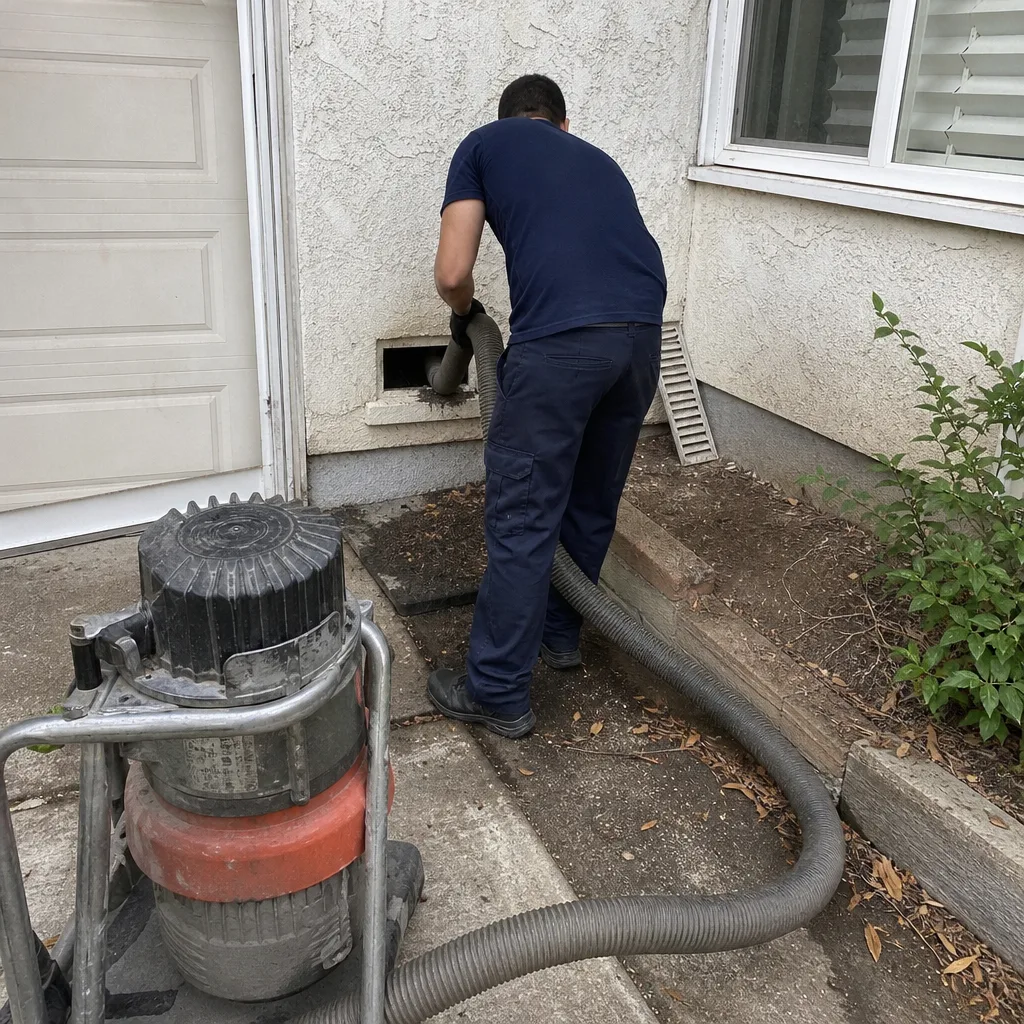 Before
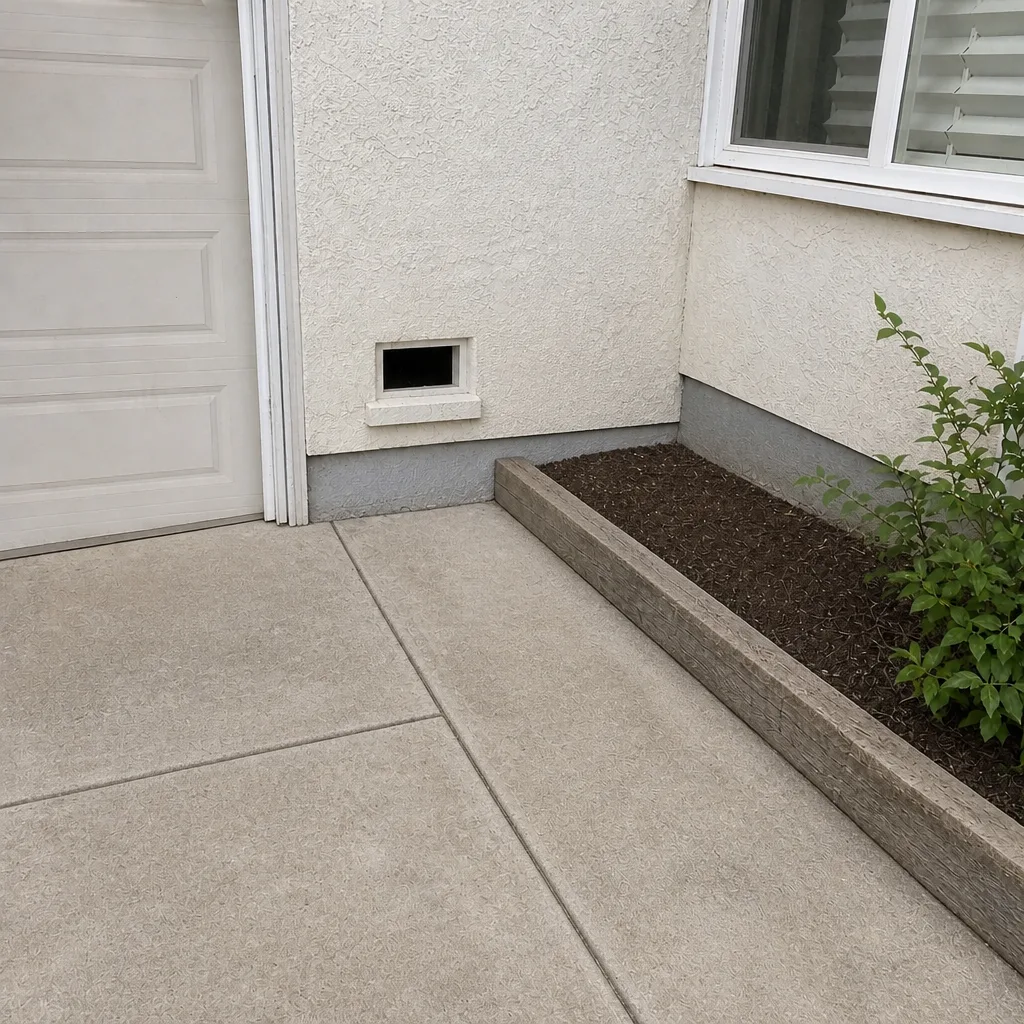 After
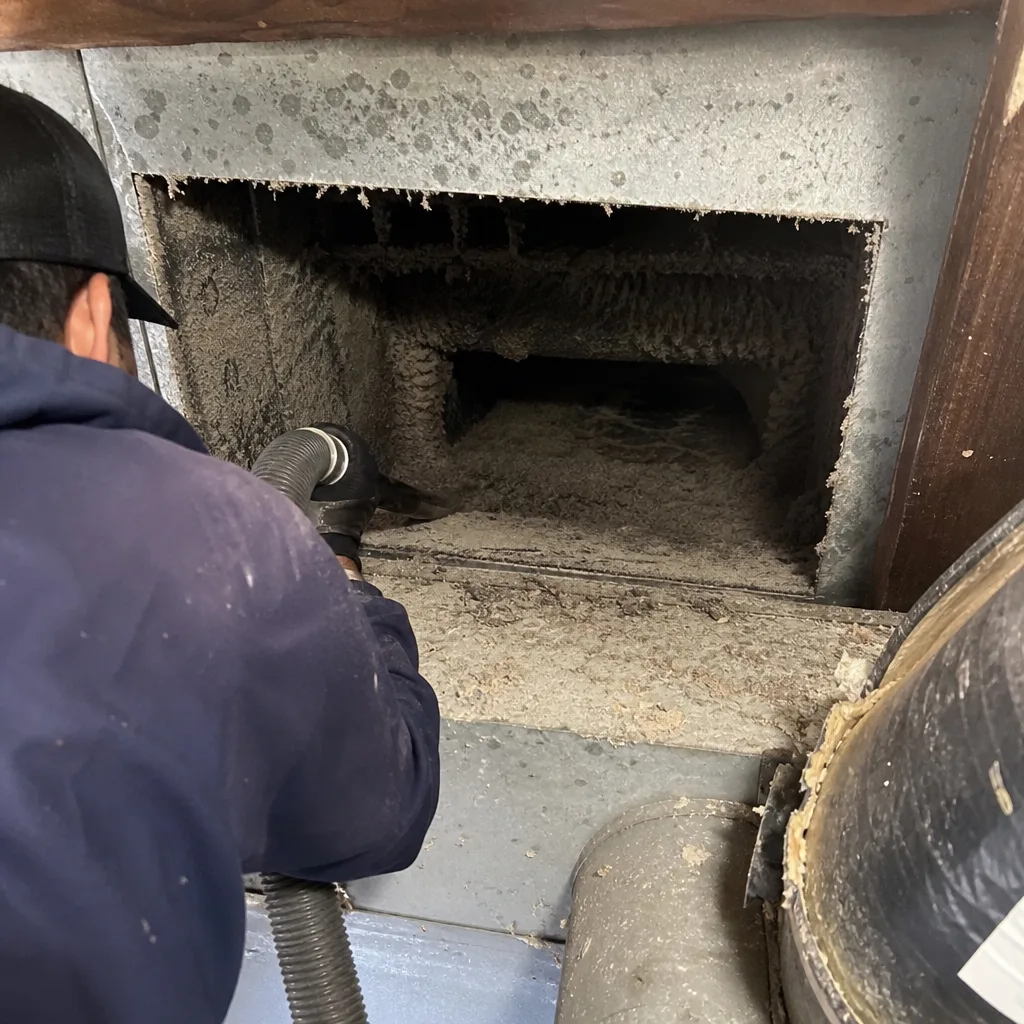 Before
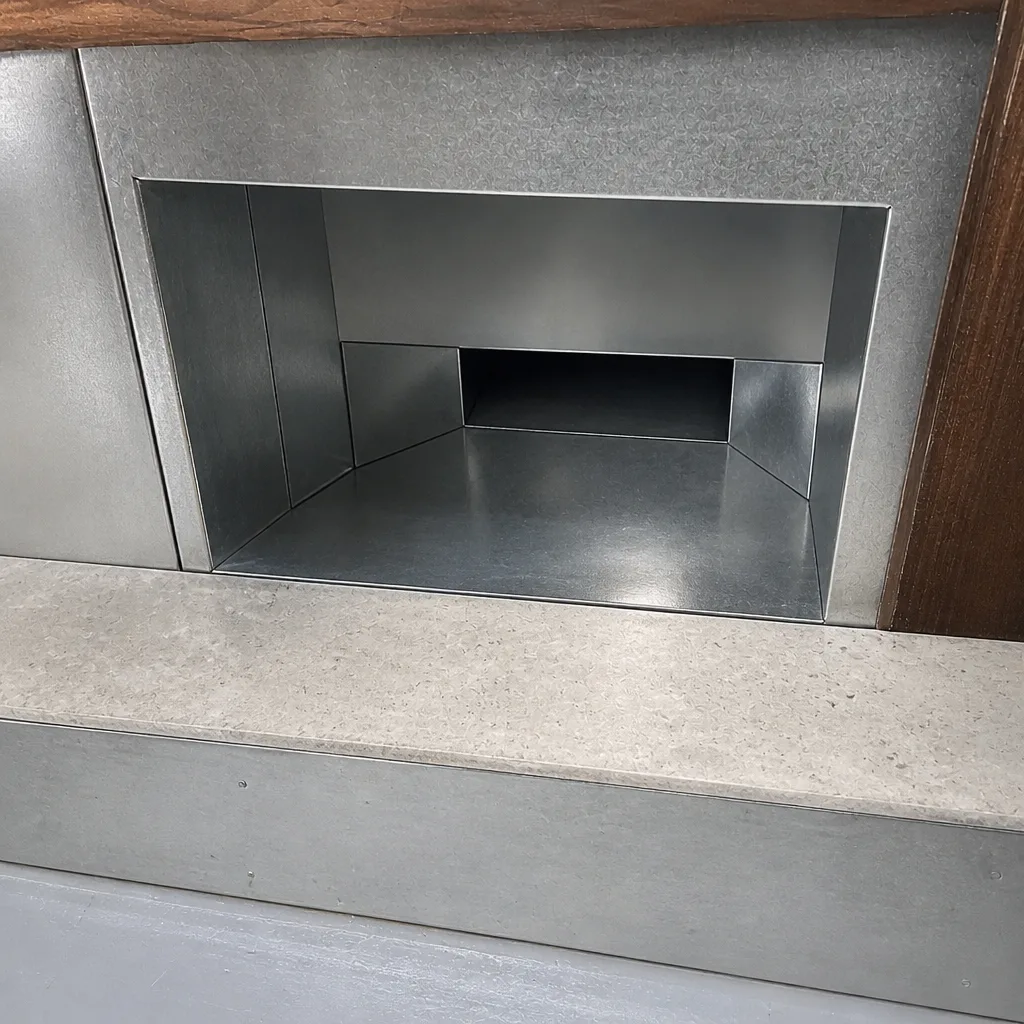 After
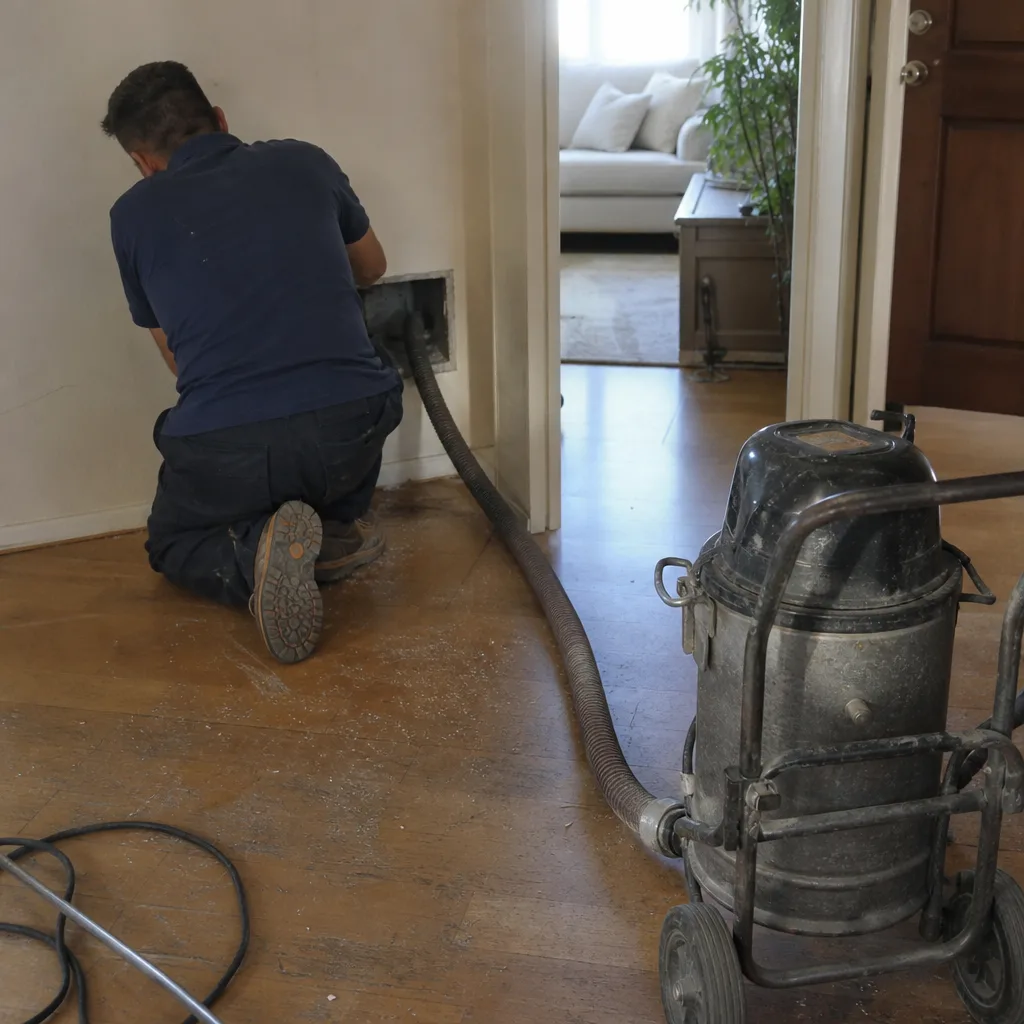 Before
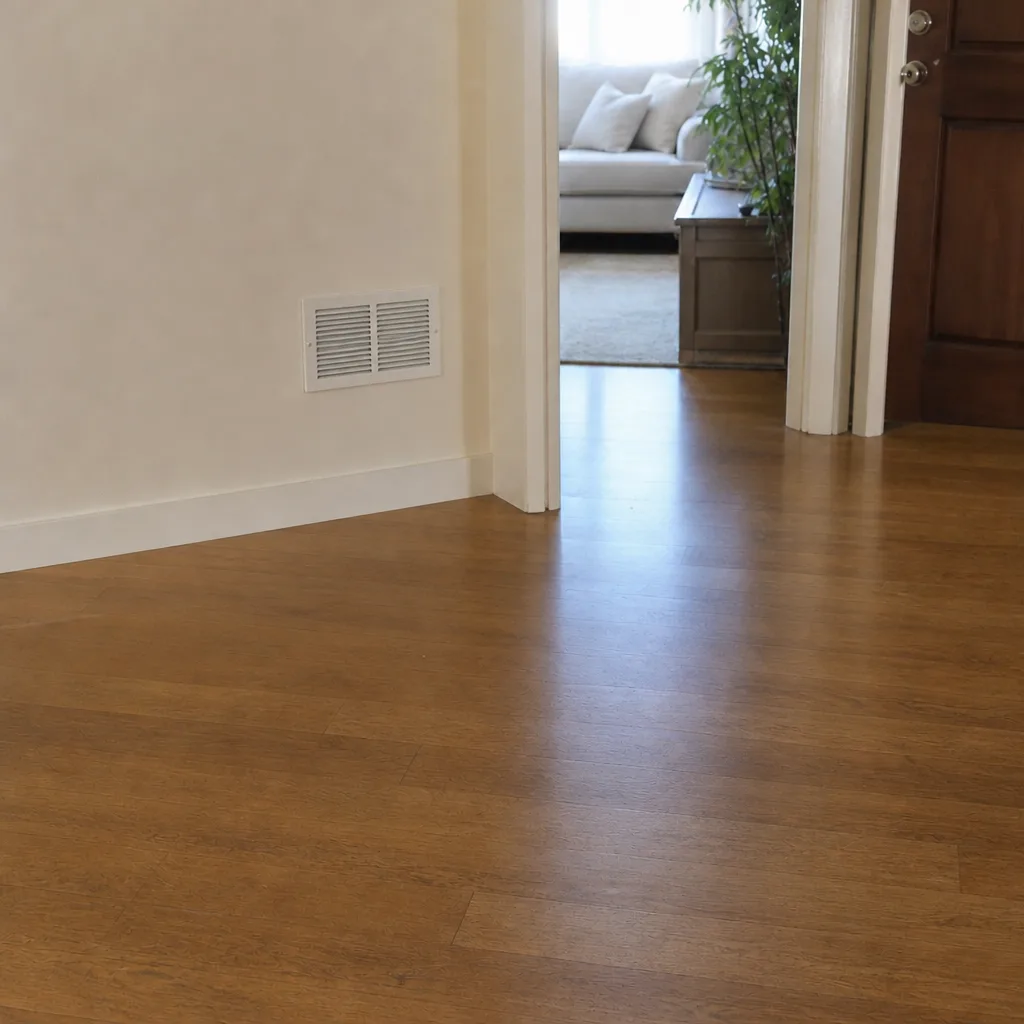 After
When to Call a Professional
Call for a professional evaluation when the system shows signs of contamination you cannot see: musty odors every time the system starts, visible dust plumes from supply registers, or a recent renovation that sent drywall dust through the supply trunk. Call when the dryer takes more than one cycle to dry a normal load, since lint buildup is a documented fire risk and dryer vent cleaning is part of the same scope. Call when you notice a room that is consistently warmer or cooler than the rest of the house, because a disconnected or crushed duct run is more common than you would expect in older Costa Mesa homes. And call when you are about to sell or file an insurance claim, because a documented service record is easier to produce before escrow than after.
When we come out, we tell you what we find. Cleaning happens with professional-grade equipment, and repairs go to a licensed C-20 partner if they cross the line. Costa Mesa Air Duct Cleaning Pros offers free estimates in Costa Mesa. Call (877) 492-3292. We answer 24/7. Fast dispatch from 7am to 7pm, Sunday through Friday.
Frequently Asked Questions
No. Routine air duct cleaning in Costa Mesa does not require a building permit, and no city inspection is triggered by cleaning alone. A permit becomes relevant only when the work involves new duct installation, system reconfiguration, or a mechanical change that requires C-20 licensed work.
Permanent duct sealing does, yes. Mastic-sealing joints that were opened for cleaning access is maintenance, but permanent sealing of leaks, aerosol-based duct sealing, and any alteration of the duct system falls under C-20 Warm-Air Heating, Ventilating and Air-Conditioning contractor scope. Verify the contractor’s license on the CSLB lookup before approving the work. Call (877) 492-3292 for an exact quote on cleaning – estimates are free.
Only if the refrigerant circuit is opened. Surface cleaning of the evaporator coil with the cabinet open and the refrigerant lines intact does not require Section 608 certification. If the coil is pulled and refrigerant is recovered, Section 608 certification is required by federal law, and C-20 licensing applies on the state side.
No. Costa Mesa’s Building Division does not inspect routine air duct cleaning, and there is no permit associated with it. The City is only involved when a mechanical permit was pulled for HVAC installation or major alteration, and that inspection happens under the permit, not during a cleaning visit.
Keep the written estimate, the invoice with the contractor’s license number, the contractor’s insurance information, and a written service summary describing what was cleaned and any issues found. If refrigerant work was performed, keep the recovery and recharge record. If a permit was pulled, keep the permit number and final inspection sign-off. These documents matter for home sale disclosure, insurance claims, and future warranty questions.
Usually because they are not doing the same work. A low quote can skip the air handler cabinet, skip the negative-air capture, skip the supply trunk and just run a shop vacuum over the visible registers, or use teaser pricing that climbs once the technician is on site. We price the whole system on a written estimate agreed before work starts, clean the entire air pathway with Rotobrush and Abatement Technologies equipment, and show before-and-after photos of your own ducts. No per-vent pricing, no surprises. Call (877) 492-3292 for an exact quote – estimates are free.
The Bottom Line
Air duct cleaning itself is not a permitted activity in Costa Mesa, which is why nobody in the city permits or inspects it. But the line between cleaning and mechanical work is real, and it matters for your license verification, your property records, and your insurance claims. Ask for the C-20 when the work involves duct modification, sealing, or register changes. Ask for Section 608 when refrigerant is on the table. Verify everything on the CSLB. And keep the paperwork in one place, because you will need it during escrow or an insurance filing long after the technician has left. That’s the whole framework. Everything else is equipment and training. We cover the full air pathway with professional-grade tools because a thorough job, documented properly, is the only job worth doing. Book a professional air duct cleaning visit and see the difference documentation makes.
Ready to move forward? Call Costa Mesa Air Duct Cleaning Pros at (877) 492-3292 for a free estimate. We answer 24/7. Fast dispatch from 7am to 7pm, Sunday through Friday. Our technicians have up to 14 years of experience, and we’ll walk you through what we find, what needs a license, and what comes next. Visit Costa Mesa Air Duct Cleaning Pros to see the full range of air pathway services we offer in one visit.
Written by the team at Costa Mesa Air Duct Cleaning Pros.